~/infraprod · not deployed

senior ai engineer · portfolio

jonathan tsen
prod · liveResume ↓
SENIOR AI ENGINEER AT LABRYNTH

I ship AI to production.

I take AI prototypes to real users. What I enjoy most comes after: cutting the cost by finding the tokens we don't need.

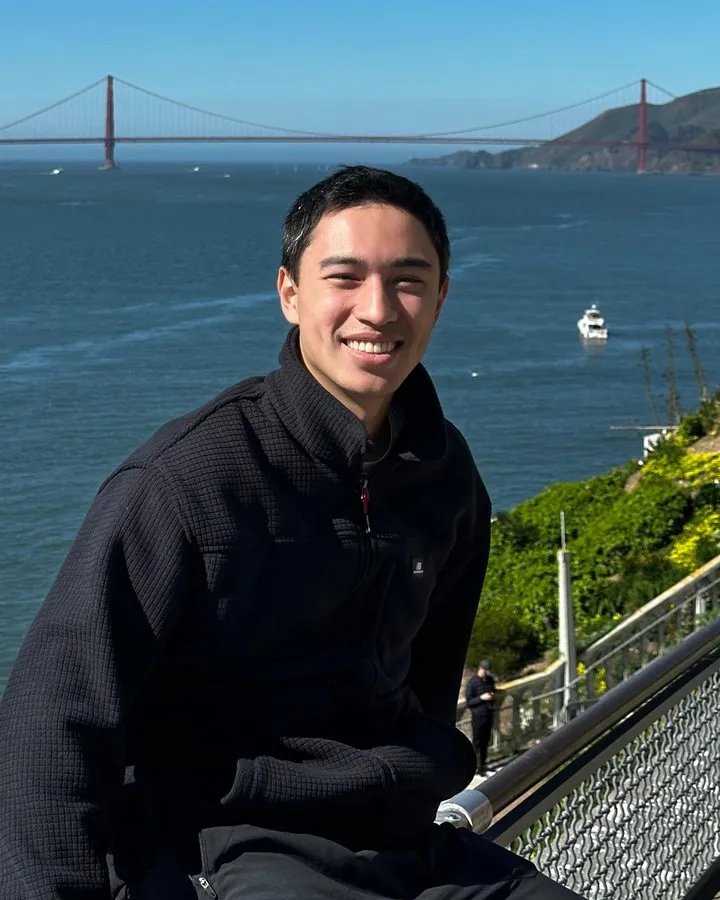
Jonathan Tsen smiling, with the Golden Gate Bridge behind him
// llm cost per permit
95% ↓

LLM cost per permit application, from about $100 to $5.

// 9-agent graphrag qa
74→94

QA score of a 9-agent GraphRAG workflow.

// plan-check accuracy
87%

Match with the City of Lancaster plan checker.

// broken scrapers
16→8%

Halved broken bill scrapers (22M bills/yr) with monitoring first, then LLMs on the hardest sites.

JOURNEY

How I got here

  1. '25

    First engineer at Labrynth

    AI in production for nuclear licensing and US building permits. Cut LLM cost per compliance check by 95%.

    LabrynthSenior AI Engineer · May 2025 – now
    read more

    Production AI that checks regulatory documents for an advanced nuclear developer and building permits for US cities, plus the serverless stack it runs on.

    • Built the engine that checks every citation and engineering value in 500-page nuclear licensing documents against 150 GB of NRC, DOE and CFR sources, and put the beta on the client's real data a week before the deadline. The client estimated ~50% less review time.
    • Turned a small paid pilot into the client's licensing contract: proposed an engineering assistant instead of a one-off report (GraphRAG on Neo4j with page citations). The client's engineer rated it 90–95% correct and showed it at the company offsite.
    • Cut LLM cost per building-code compliance check by 95% and run time by ~85% (35 → 5 min): sent ~90% less of the code to the model, cached the PDF, shrank outputs ~80% with TOON and routed chapters to models benchmarked on our own data. The pipeline now runs inside the main platform.
    • Reached 87% accuracy against the City of Lancaster, CA plan checker's own labels in an AI plan-check pilot. Built 4 of the first 6 checks and, once it was clear the report went straight to applicants, changed the goal from finding more issues to getting every comment right.
    • Made the platform export-control compliant on AWS: every model on Bedrock, customer-managed KMS keys, CloudTrail audit logs, US-only WAF and Cognito MFA, all in Terraform with CI/CD. Also shipped a GCP Cloud Run service with Pulumi.
    • Kept production running: traced a login incident where 28% of sign-ins failed to its root cause and made login fail gracefully, and got the client's largest document through three AWS limits (memory, Bedrock throttling and the 15-minute Lambda cap).
    • Built a 9-agent GraphRAG workflow that pre-drafts nuclear environmental report sections. Internal QA score went from 74 to 94, sources cited more than doubled, and the client graded the first section B+/A-.
    • First engineer: built the Red Tape Index permit ranking (334 cities, 40 states), interviewed and onboarded early hires, and ran the live demo when Labrynth was one of 50 companies picked for a White House permitting expo.
    BedrockStep FunctionsLambdaTerraformPulumiNeo4jGraphRAG

  2. '23

    From researcher to team lead

    Joined as a researcher, ended up leading six people on EnergyGPT. Fine-tuning took one agent from 66% to 82% accuracy.

    CEIA – Center of Excellence in AIGenerative AI Research Team Lead · Aug 2023 – May 2025
    read more

    Promoted from AI Researcher to lead a team of 6 on EnergyGPT, a generative AI platform for Brazil's power sector.

    • Fine-tuned Llama 3.1 8B on 140K examples for a health-plan approval agent: accuracy went from 66% to 82%, ahead of the best of 8 off-the-shelf LLMs (GPT-4o). It went to production for the internal team.
    • Scaled training-data collection for a Brazilian LLM from 10 universities to ~150: replaced one scraper per university with the Scopus database and gathered ~300,000 research articles in 3 weeks.
    • Trained and improved LLMs, built RAG pipelines and developed AI agents for the energy and healthcare sectors.
    LLMsRAGAI agents
  3. '23

    A detour into private equity

    Six months of data science for private equity, including the analyses behind three buy/sell decisions.

    Advent InternationalData Science Associate · Jan 2023 – Jun 2023
    read more

    Data science for private equity: sourcing, due diligence and value creation.

    • Built the data analyses behind three buy/sell decisions: ~12,000 customer reviews showed a payments company's review share grow from 5% to 51% (Advent acquired it); auction data showed damaged cars with driver-assist tech selling for ~20% of list price (supported an exit); and store coverage of ~50% of the population vs ~88% for the main competitor (supported a sale).
    • Halved broken bill scrapers (16% → 8%) at a portfolio company that collects 22M bills a year: added monitoring first, then used LLMs on the hardest sites.
    • Automated LinkedIn outreach for a portfolio company's HR team and filled ~60% of its hard-to-fill tech roles (146 hires) in 2 months.
  4. '22

    Code that runs every day

    Production crawlers that had to run every day.

    ZyteWeb Scraper · Jul 2022 – Jan 2023
    read more

    Built and maintained production crawlers, and kept them healthy.

    • Production Scrapy crawlers, monitored with Sentry and Spidermon to catch and triage failures.
    ScrapySentrySpidermon
  5. '22

    Master's at ITA

    Master's in data science, thesis on missing data.

    ITA – Instituto Tecnológico de AeronáuticaMaster's in Data Science · Jan 2022 – Dec 2026
    read more

    Thesis: Hierarchical Classification of Missing Data Mechanisms, a statistical feature engineering approach with LLM augmentation and real-world validation.

    StatisticsMLLLMs
  6. '21

    A summer in Chicago

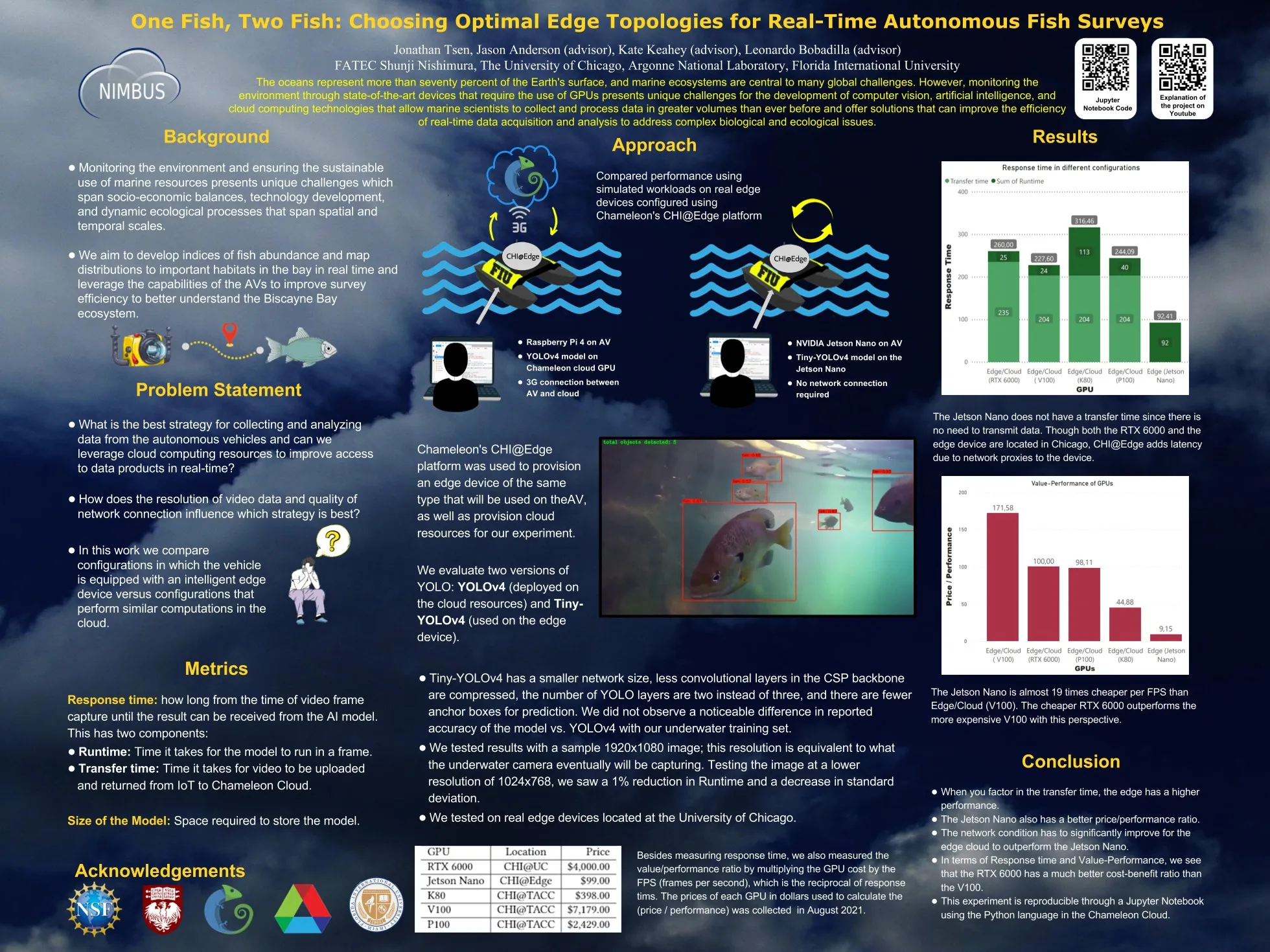
    One of 120 students in the CDAC Summer Lab. Counting fish turned into my SC21 poster.

    University of ChicagoSummer Research Assistant · May 2021 – Aug 2021
    read more

    One of 120 students selected for the CDAC Summer Lab, on the Chameleon Cloud team with Argonne and FIU.

    • Trained a YOLOv4 model that counts fish underwater: 78% accuracy on a V100 GPU.
    • Benchmarked V100, RTX 6000, P100 and K80 GPUs against an edge Jetson Nano: the Jetson was 19× more cost-effective, at 46% accuracy. Set up real-time data transfer from IoT devices to the cloud.
    • Presented as a poster at SC21: "One Fish, Two Fish".
    Computer visionGPU benchmarkingIoTEdge
  7. '21

    First research job

    An image classifier for robots that monitor mangroves.

    Florida International UniversityProject Research Assistant · Feb 2021 – Oct 2021
    read more

    Image classification for robotic mangrove monitoring.

    • Trained an image classifier (mangrove, river, boundary) on Landsat satellite tiles that reached 90% accuracy, and measured ~3% mangrove loss in Miami in 2020–21.
    Computer vision
  8. '20

    First data job

    Automated dashboards and a sales forecast with 81% accuracy.

    Carino IngredientesData Scientist Intern · Jun 2020 – May 2021
    read more

    Dashboards, reports and a first machine learning model for the leadership team.

    • Created and automated the reports behind the company's dashboards.
    • Ran exploratory analysis for the directors and the president of the company.
    • Built a machine learning model that predicts sales up to a month ahead, with 81% accuracy, and deployed it on AWS (SageMaker Pipelines, API Gateway, SNS email alerts).
    BIData visualizationMachine learning
RESEARCH

Papers

thesisITA · MScin progress · Dec 2026

Hierarchical Classification of Missing Data Mechanisms

Classifying why data is missing.

Instituto Tecnológico de Aeronáutica, Master’s in Data Science
paperSBPO 2024Oct 2024

Comparative analysis of the results of the genetic algorithm metaheuristic and the slime mold algorithm metaheuristic in school transportation routing optimization

Genetic Algorithm vs Slime Mold Algorithm on real school bus routes in Caraguatatuba-SP.

With B. R. M. Nacano and J. Mikaread the paper ↗
SC21 poster: One Fish, Two Fish, with response-time and price-performance charts
posterSC21 · ACM SRCNov 2021

One Fish, Two Fish: Choosing Optimal Edge Topologies for Real-Time Autonomous Fish Surveys

Edge vs cloud for real-time fish detection. A $99 Jetson Nano beat cloud GPUs on speed and cost.

Advisors: Jason Anderson, Kate Keahey, Leonardo Bobadilla · UChicago, Argonne, FIUview the poster ↗
CONTACT

Get in touch

Email works best.

dudujonathantsen@gmail.com